
Patient Background & Presenting Complaints
A 75-year-old male from Iraq presented with a yearlong history of severe low back pain radiating to the leg. The condition progressively worsened to the extent that he became wheelchair-bound, significantly impacting his independence and quality of life.
The pain was mechanical in nature, increasing while getting up from a sitting position, standing, and walking, and was associated with marked functional limitation. Despite conservative treatment attempts in his home country, his condition continued to deteriorate.
Clinical Evaluation & Diagnosis
Upon arrival at Artemis Hospital, Gurgaon, the patient underwent a detailed clinical examination along with advanced radiological evaluation including MRI and X-rays of the lumbar spine.
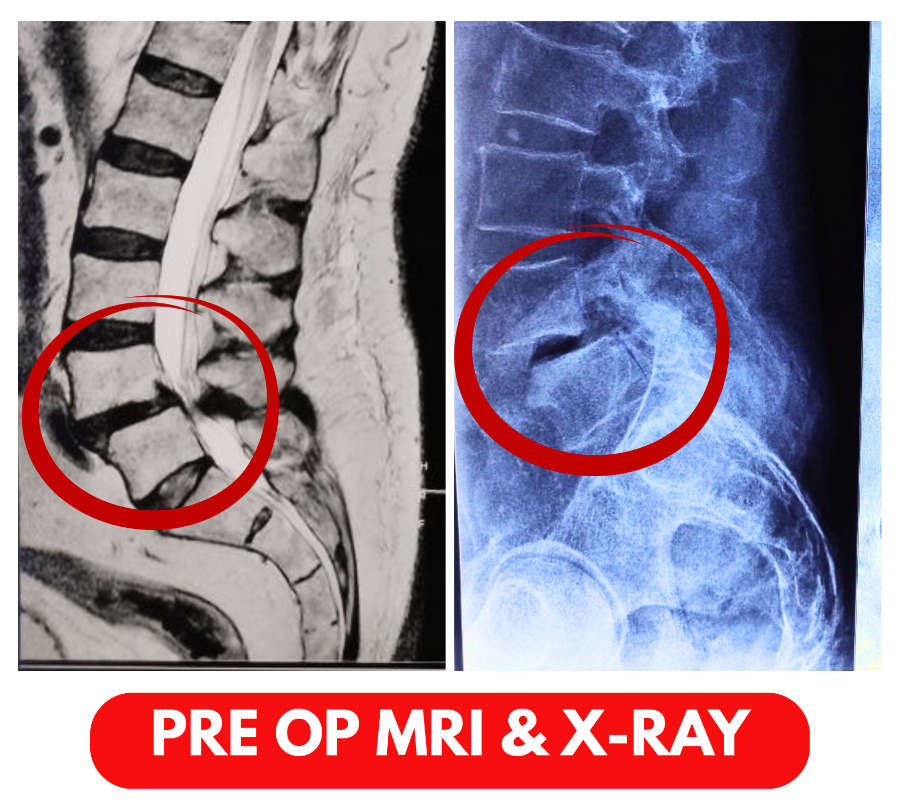
The imaging studies confirmed the diagnosis of:
- L4–L5 Spondylolisthesis (slippage of one vertebra over another)
- Lumbar Canal Stenosis, causing significant nerve compression
These findings explained his severe pain, reduced mobility, and inability to walk independently.
Treatment Plan & Surgical Intervention
Given the severity of symptoms, radiological findings, and failure of conservative management, the patient was advised Minimally Invasive Transforaminal Lumbar Interbody Fusion (MIS-TLIF) at the L4–L5 level.
The minimally invasive approach was chosen to:
- Reduce muscle damage
- Minimize blood loss
- Allow faster recovery and early mobilization
The surgery was performed successfully with precise decompression of the spinal canal and stabilization of the affected segment.
Post-Operative Recovery & Outcome
Following surgery, the patient showed remarkable improvement. His back pain reduced significantly, posture improved, and he gradually regained the ability to stand and walk with confidence.
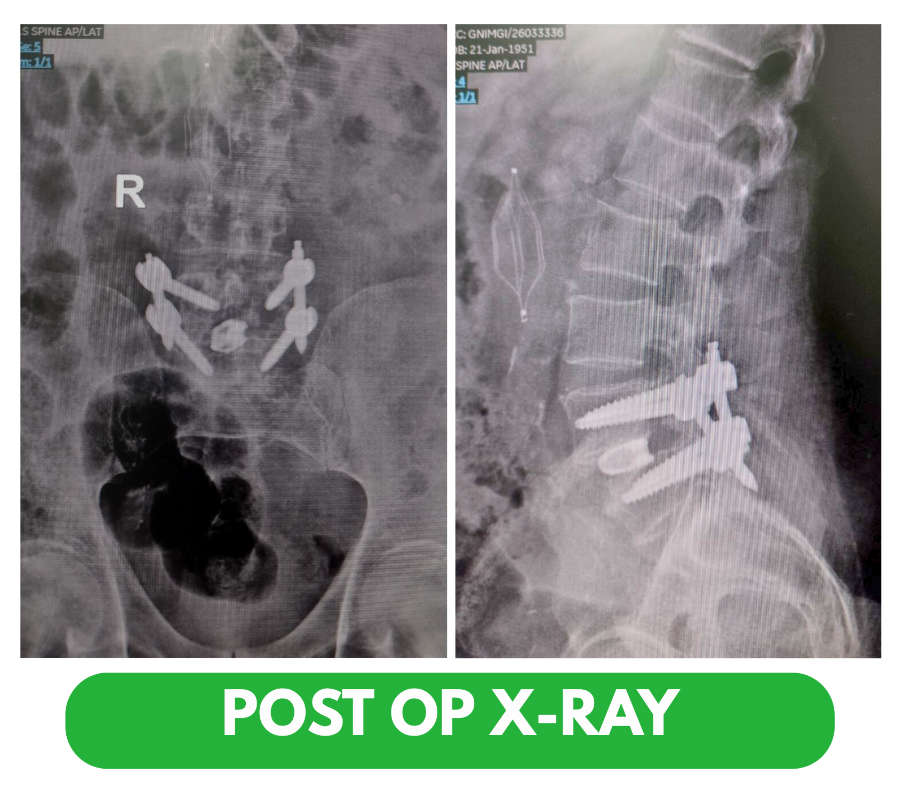
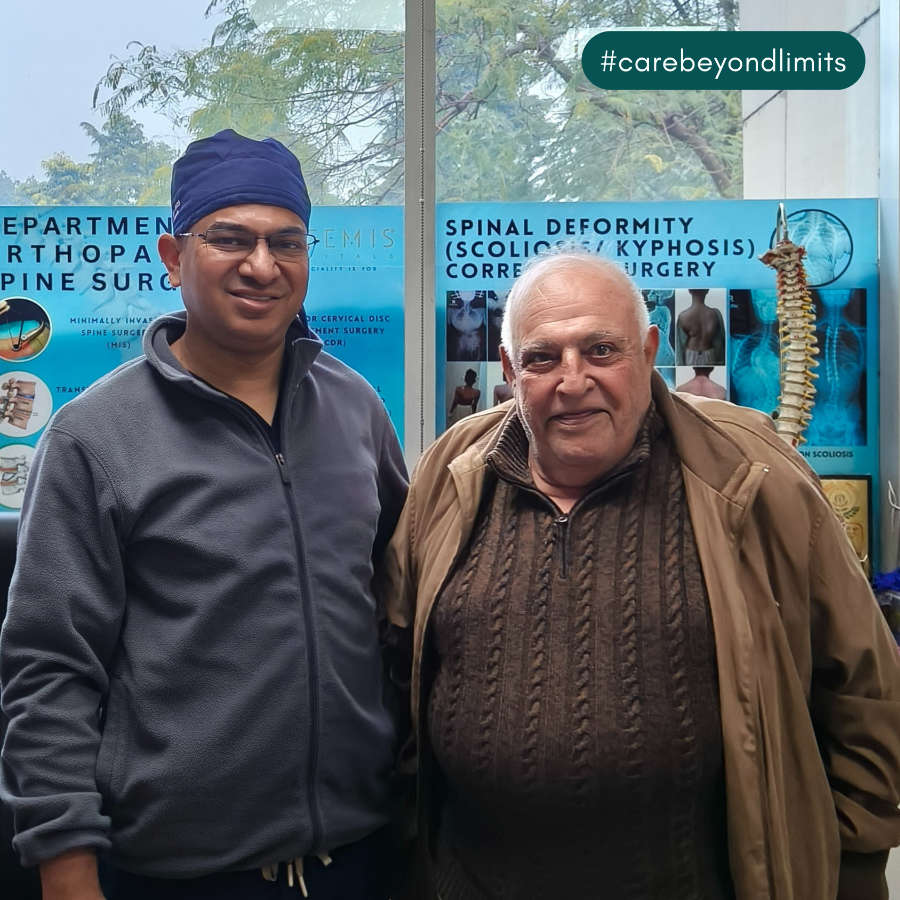
With structured rehabilitation and close follow-up, his recovery progressed smoothly. Today, the patient is pain-controlled, functionally improved, and ready to fly back to Iraq, leaving behind months of disability and returning home with renewed independence and confidence.
Expert Insight: TLIF Surgery & Spondylolisthesis

According to Dr. Hitesh Garg, spondylolisthesis commonly occurs due to degenerative changes, age-related disc wear, facet joint instability, or stress-related defects, leading to vertebral slippage and nerve compression. When left untreated, it can progress to severe pain, neurological symptoms, and loss of mobility.
“TLIF surgery is a highly effective solution for patients with spinal instability and canal stenosis. With modern minimally invasive techniques, we can decompress nerves, restore spinal alignment, and provide long-term stability while enabling faster recovery and improved quality of life.”
Advancements in spine surgery, especially MIS-TLIF, have transformed outcomes for patients who were once severely disabled—allowing them to walk again and return to normal life.
Conclusion
This successful case highlights how early expert evaluation, accurate diagnosis, and advanced minimally invasive spine surgery can be truly life-changing—even for patients who have been wheelchair-bound for months.
Right diagnosis. Right surgery. Right recovery.