
A 49-year-old female from Iraq presented to Dr Hitesh Garg at Artemis Hospital with a chief complaint of progressive lower back pain radiating to both legs. The pain had a gradual onset and was accompanied by numbness and tingling in the lower limbs, significantly affecting her mobility and quality of life.
Clinical Evaluation and Diagnosis
A comprehensive assessment was conducted, including a detailed physical examination and advanced radiological imaging. The evaluation confirmed:
- L3–L4 lumbar spondylolisthesis, causing spinal instability
- L4–L5 degenerative arthropathy, contributing to nerve compression and persistent symptoms

Given the progressive nature of symptoms and failure of conservative measures, surgical intervention was recommended.
Surgical Plan and Procedure
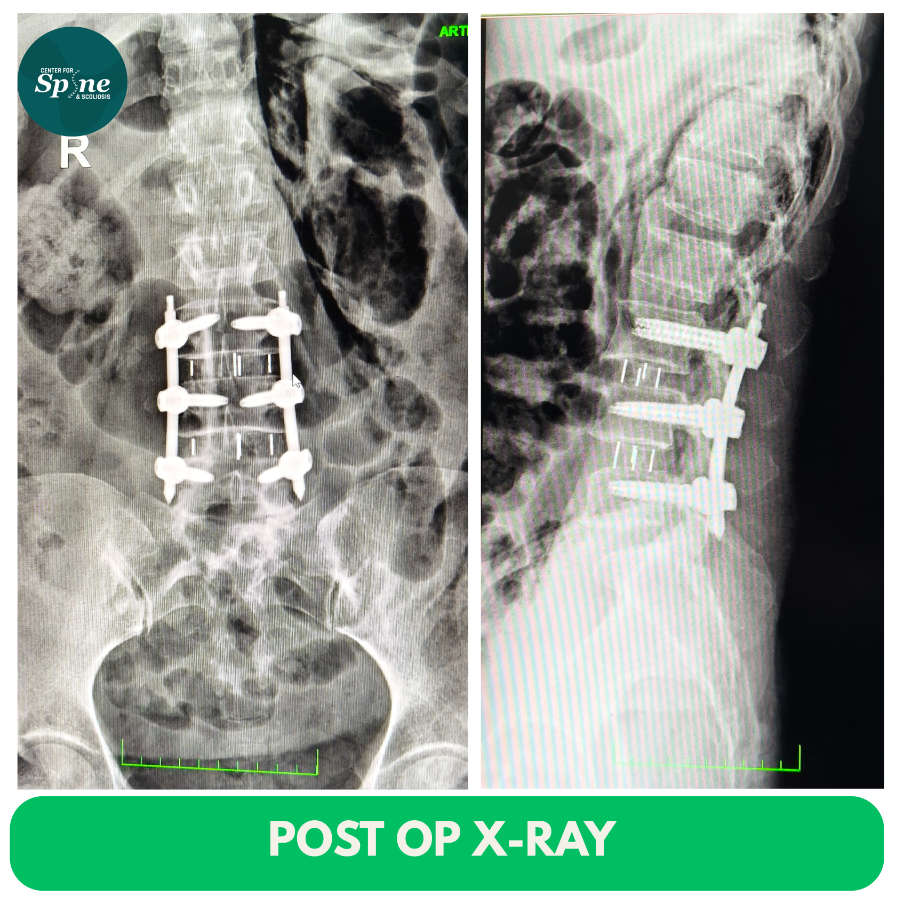
The patient was advised OLIF (Oblique Lumbar Interbody Fusion) from L3 to L5, combined with posterior Minimally Invasive Surgery (MIS) fixation. This approach was selected to achieve optimal spinal stabilisation and decompression while minimising surgical trauma.
The surgery was performed successfully without complications. Postoperatively, the patient experienced significant and early relief from back and leg pain, along with marked improvement in neurological symptoms.
Recovery and Outcome
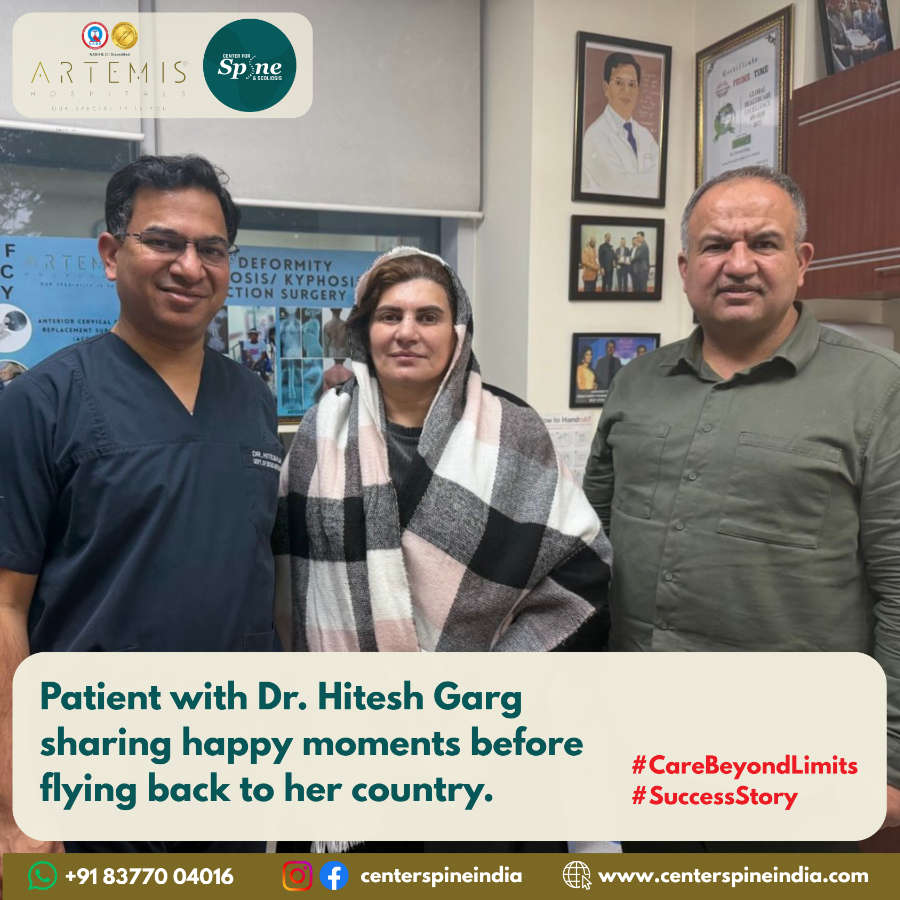
The patient mobilised early after surgery and showed steady functional recovery. After a two-week postoperative stay in India, she returned to Iraq pain-free, confident, and satisfied with the outcome.
Dr. Hitesh Garg’s Insight: Why OLIF and MIS Over Traditional Open Surgery
According to Dr. Hitesh Garg, OLIF combined with MIS fixation represents a major advancement over conventional open spine surgery due to several key advantages:
- Minimal muscle damage by avoiding extensive posterior dissection
- Reduced blood loss and postoperative pain
- Faster recovery and early mobilisation
- Shorter hospital stays, which is especially beneficial for international patients
- Lower risk of infection and complications
- Excellent spinal stability and long-term outcomes
- Better Spinal Alignment leading to good long-term clinical results.
Dr Garg emphasises that modern minimally invasive techniques, when appropriately indicated, enable patients to return to their normal lives sooner while achieving results comparable to—or often superior to—those of traditional open procedures.
This case highlights how advanced spine surgery techniques, combined with precise diagnosis and expertise, can restore mobility and quality of life—even for patients travelling from across the globe.